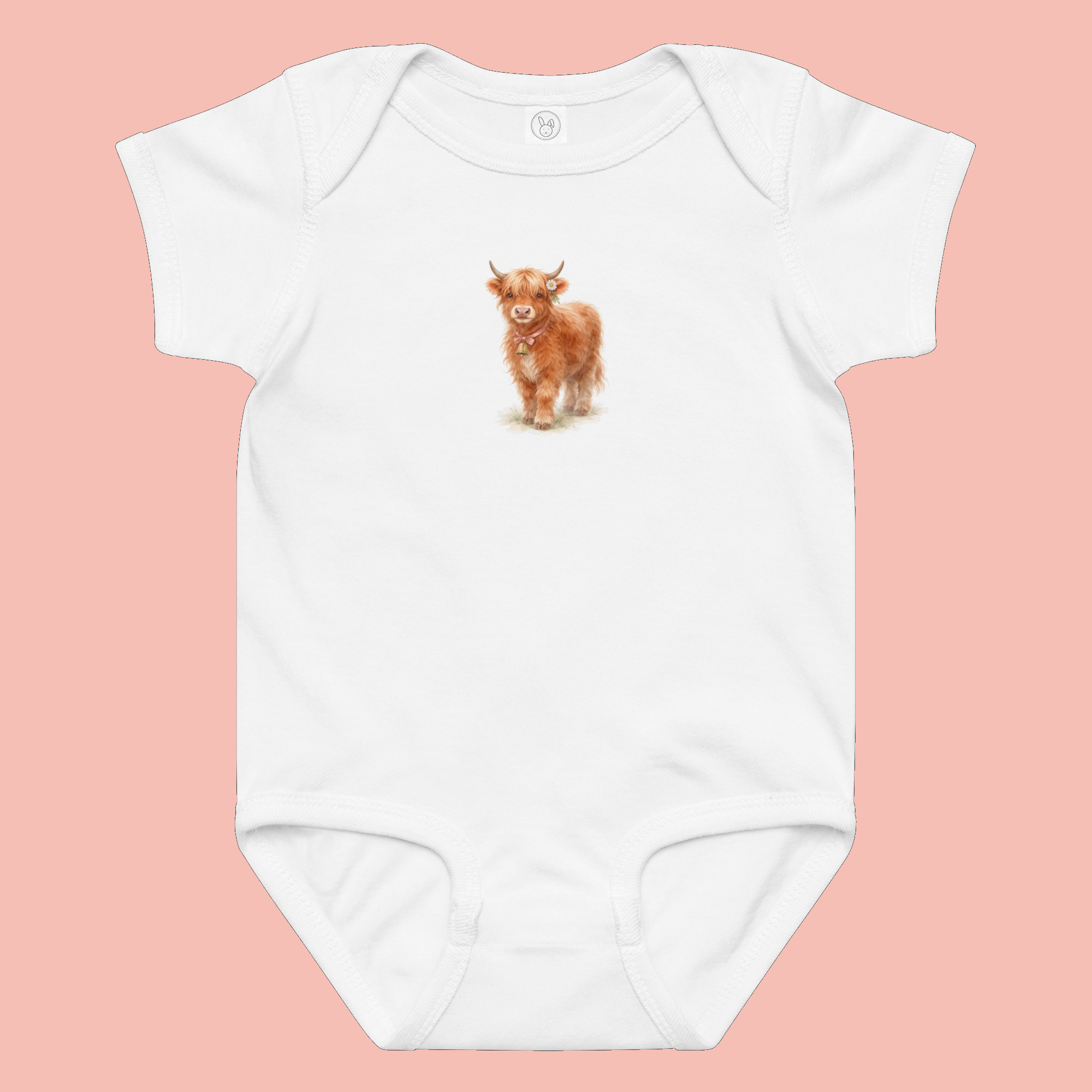
Somewhere between the third load of tiny laundry and the fourth 2 a.m. wake-up, most parents start to notice how much their baby's skin has to say. A pink patch here, a rough little cheek there, a rash that appears after one outfit and not another. Choosing natural baby onesies for sensitive skin is one of the quietest, kindest things you can do for that soft new world of skin — and it starts with what the fabric is actually made of.
We make our onesies the way we'd want them made for our own little ones: from 100% combed cotton, painted with hand-illustrated watercolor farm animals, and printed only when you order. This guide is everything we've learned about what a baby with sensitive skin really needs from a onesie, written the way we'd tell a friend over tea.
Why a baby's skin needs gentler fabric
A baby's skin is thinner than an adult's and still building its protective barrier. It loses moisture faster, absorbs more of what touches it, and reacts quickly to heat, friction, and anything it doesn't like. That's why a onesie that feels fine to you can leave a baby flushed and fussy.
Babies with eczema or very sensitive skin feel this most. Fabric that traps heat can make itchiness worse, and rough seams or stiff finishes can rub the same spot all day. The goal is simple: a fabric that lets skin breathe, stays soft, and asks nothing of your baby's skin that it can't give.
Why 100% cotton is the natural baby onesie for sensitive skin
Cotton fibers are hollow and airy, which is why cotton breathes. Air moves through the fabric, moisture drifts away from the skin, and a little body is able to keep a steady temperature on its own. Newborns can't regulate their temperature well, so this matters more than almost anything else on the tag.
Synthetic fabrics are made from plastic fibers. They tend to hold heat close to the skin and don't absorb moisture the way cotton does. That clammy, overheated feeling is exactly what sensitive skin protests about. If you're curious about the bigger picture, we wrote all about it in Why 100% Cotton Matters.
The softest thing you can put against new skin is something that came from a field, not a factory.
Reading the label: no blends, no mystery
When you're shopping for sensitive skin, the label is your best friend. Look for the words “100% cotton” and be a little wary of anything that says “cotton blend” or “soft-touch.” Those phrases often mean a mix of fibers or a finish added to make the fabric feel a certain way for a little while.
Pure cotton doesn't need any of that. It's naturally soft, and it gets softer with every wash. Every Princess Strawberry onesie is 100% combed cotton — a process that removes the short, scratchy fibers and leaves the long, smooth ones. Nothing synthetic, nothing hiding in the blend.


What to look for in a baby onesie for sensitive skin
Beyond the fiber itself, a few small details make a big difference for delicate skin. Here is the little checklist we keep in our heads:
Soft, flat seams so nothing rubs against skin all day. Envelope shoulders that slip on easily and don't tug at a tender neck. Snap closures that sit flat and are quick for those middle-of-the-night changes. Gentle inks and finishes that don't feel stiff or crackly against the skin. And of course, breathable, pure cotton that keeps your baby comfortable from morning nap to bedtime.
A good onesie should feel like a hug that doesn't ask for anything. If you wouldn't want it against your own cheek, it probably doesn't belong against a baby's.
Love what you're reading?
New stories, restocks, and early access — straight to your inbox.
Caring for cotton so it stays soft
Cotton is wonderfully forgiving. Wash new onesies once before the first wear, using a fragrance-free detergent so nothing lingers on delicate skin. Cool or warm water is plenty, and a gentle cycle keeps the watercolor designs looking lovely for years of hand-me-down possibility.
Skip the fabric softener, which can leave a coating on fibers and make them less breathable. Cotton softens all on its own, and a line-dried onesie smelling faintly of sunshine is hard to beat. Tumble dry low if you must, and know that each wash only makes it kinder.
Dressing a sensitive-skinned baby, season by season
In cooler months, layering is gentler than bulk. A cotton onesie as the first layer, then a soft knit or a wool-free cardigan on top, lets you add and remove warmth as the day changes without disturbing a sleeping baby. Cotton against the skin keeps moisture from lingering, which helps tender patches stay calmer.
In summer, a short-sleeved cotton onesie on its own is often all you need. It protects skin from scratchy grass and blankets while still letting air circulate. For babies prone to heat rash, breathable cotton is a small thing that makes a surprisingly big difference on warm afternoons spent on a quilt under the apple tree.
One last tip from experience: when you introduce anything new, give it a day. Dress your baby in a freshly washed onesie, watch how their skin looks and feels afterward, and trust what you see. Every baby is different, and if skin troubles persist, a pediatrician is the best person to guide you. What we can promise is that pure cotton will never be the thing making it harder.
A little farm for the nursery
Because soft fabric deserves soft pictures, every onesie in our collection carries an original watercolor farm animal: the gentle highland cow, the sleepy bunny, the woolly lamb, and four friends more. On the back of each one, in small, quiet letters, are the words “P.S. I love you.” It's the detail parents tell us they love most.
They make a lovely gift, too. A new parent rarely needs another noisy plastic thing — but a pure cotton onesie they can trust against their baby's skin is the kind of present that gets used, washed, and remembered. Browse the whole Princess Strawberry shop to find your favorite, or pair a onesie with a soy candle for a cozy new-parent set.
Made fresh, just for your baby
Every Princess Strawberry piece is made to order, which means your onesie is printed the day you ask for it and has never sat folded in a warehouse for months. Less shelf time means no storage treatments and less waste. You can read more about our philosophy on the about page.
Choosing natural baby onesies for sensitive skin doesn't need to be complicated. Choose pure cotton, check the label, look for gentle details, and wash with care. Your baby may not be able to thank you — but their skin will.

